THE REVIEW / Puzzle adventure
Chicory: A Colorful Tale
An inventive painting adventure that uses its brush to connect playful expression, environmental puzzles and the pressure of creative expectations.
The programme
Game facts
- Developer
- Wishes Ultd., Greg Lobanov, Alexis Dean-Jones, Lena Raine, Madeline Berger, A Shell in the Pit
- Publisher
- Finji
- Released
- 10 June 2021
- Platforms
- Windows · macOS (Steam edition)
- Model
- Paid game
- PEGI
- 7 — Nintendo Switch edition; not a separate PC classification
- Players
- Single-player · Multi-player · Co-op · Shared/Split Screen Co-op
- Length
- Short
- Difficulty
- 2 / 5 · Approachable
- Steam Deck
- Verified
PEGI source ↗ · Steam Deck status source ↗
Edition: Base game
The score, explained
The interest and responsiveness of the core decisions and actions.
How progression, exploration and goals fit together.
The coherence of the visual, musical and narrative presentation.
How clearly the game explains its rules and offers useful ways to engage.
The depth of optional goals, alternative approaches and reasons to return.
The brush is the main tool
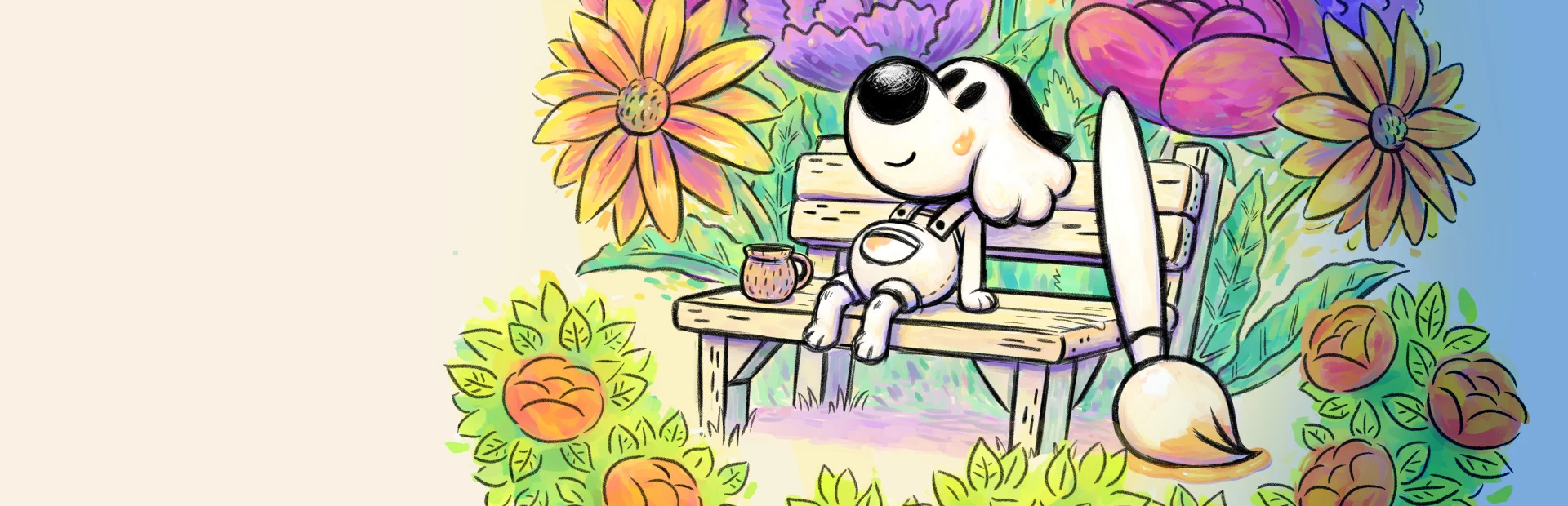
A world that has lost its colour could easily become a simple excuse to fill in blank spaces. Chicory gives that premise a more interesting owner: a small dog who inherits a remarkable brush and the expectations surrounding it. Picnic Province opens as a place to mark, explore and help, with painting functioning both as personal expression and as a practical way to interact with the environment. Conversations establish that restoring colour is also about the people who live among those lines. The early pleasure is not producing a picture that meets somebody else’s standard. It is realising how freely the game lets you leave a trace, while gradually revealing that its characters have complicated feelings about the very idea of being creatively capable.
Abilities that expand a familiar idea
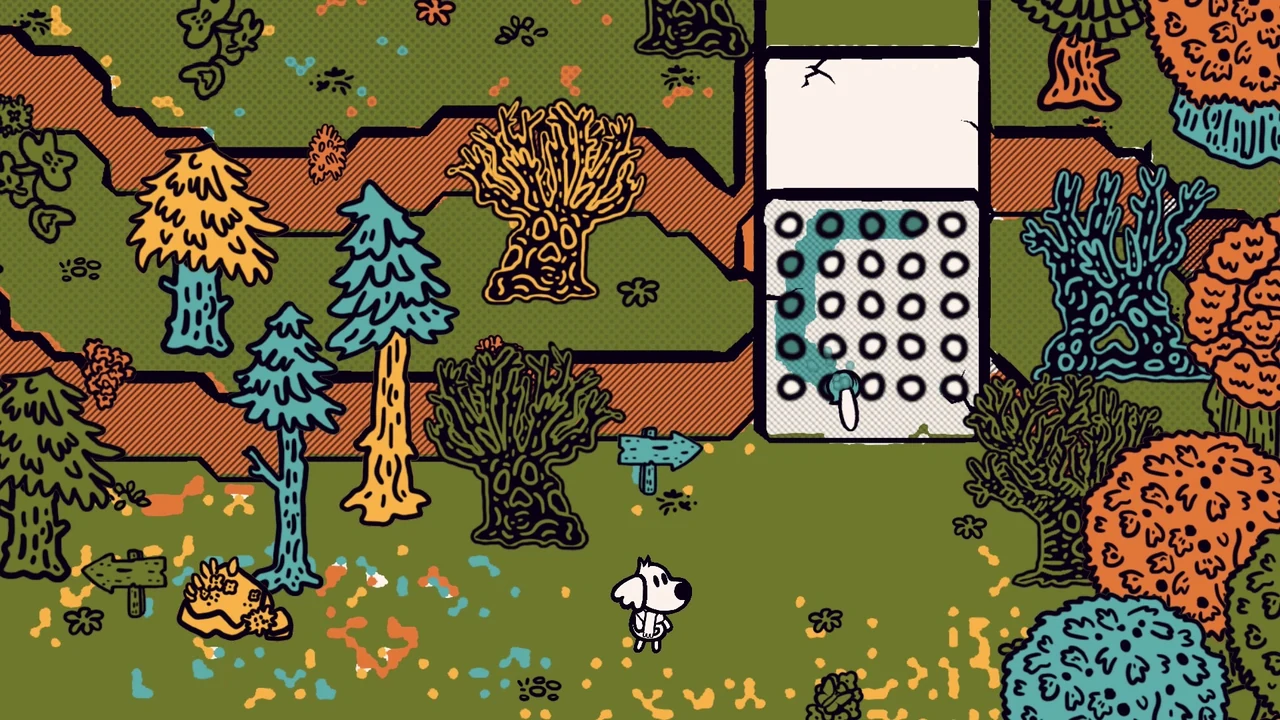
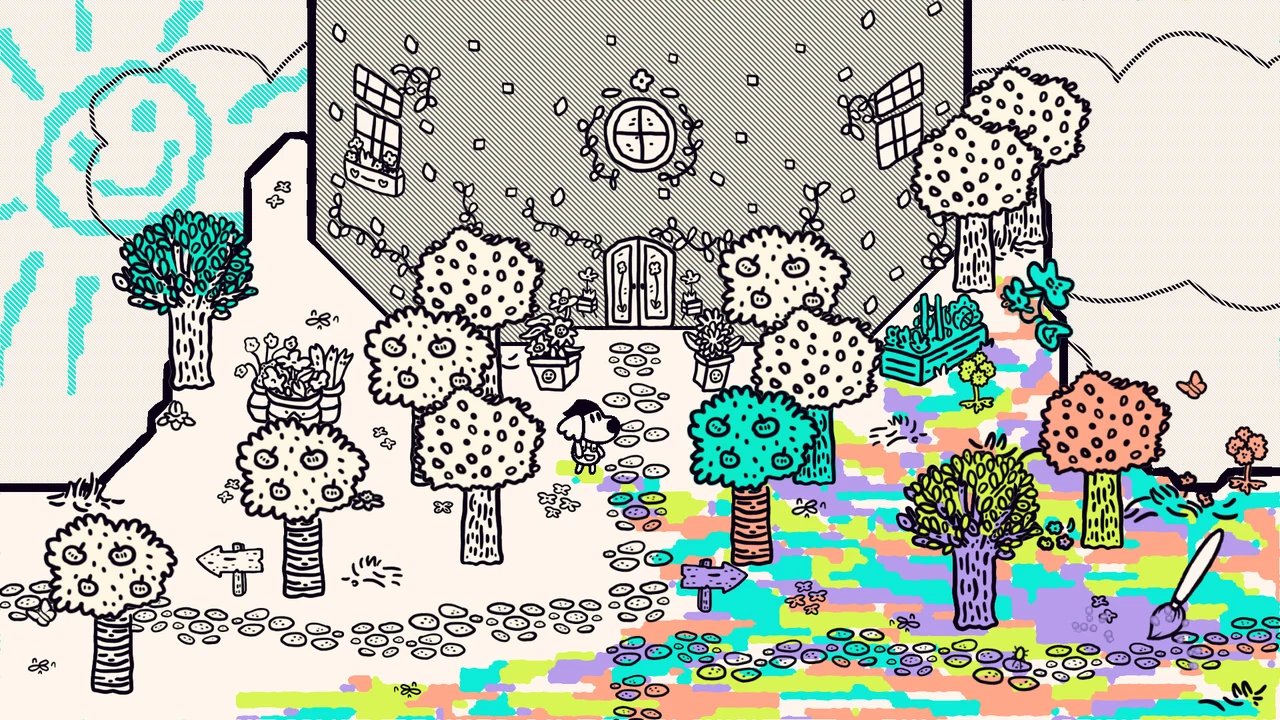
The brush connects Chicory’s story and puzzles without requiring one to serve merely as decoration for the other. New painting abilities change what can be reached, and small environmental problems encourage a different use of a tool that initially seems straightforward. At the same time, the act of making marks gives the game a persuasive way to discuss confidence and comparison. Clothing, furniture and brush styles create room for individual choices beyond the route to the next objective. The simple outlines help those choices read clearly, while Lena Raine’s music gives different places and moods their own character. This is inventive indie storytelling because the central interaction remains relevant to the subject: creating something is both an enjoyable activity and a source of pressure that the narrative can examine.
A world that leaves room for you
Players expecting a freeform painting application may find more guided adventure here than they anticipated. Progress still depends on particular abilities and puzzle solutions, so drawing anything you like is not the same as solving every problem however you like. The friendly characters and colouring-book appearance also sit alongside emotionally difficult subjects, including self-doubt and the weight of expectations. That contrast gives the story substance, but it is worth understanding before selecting it solely as a light creative diversion. Some obstacles ask you to alternate attention between character movement and the brush, which may take adjustment. The charm of decorating a space can also compete with the wish to move the story forward. Chicory leaves room for both, but their rhythms are not always identical.
For curiosity rather than competition
Chicory belongs in an indie collection for players interested in how a single interaction can carry several meanings. Painting is playful, useful and personal, while the story asks why something enjoyable can become difficult when other people’s expectations enter the picture. It is a strong choice for someone who values character conversations and environmental puzzles alongside opportunities to customise a world. Artistic confidence is not a prerequisite; the game’s relationship with creative insecurity is part of its appeal. Players who mainly want demanding combat or a sprawling set of competing systems may find its attention elsewhere. Choose it for an adventure willing to take a gentle visual language seriously, and to use that language to explore feelings that are less simple than the pictures first suggest.
The verdict
An inventive painting adventure that uses its brush to connect playful expression, environmental puzzles and the pressure of creative expectations.
Reasons to play
- Painting supports both personal expression and progression.
- The central tool remains relevant to the story’s themes.
- A clear visual language leaves room for individual marks.
Reasons to think twice
- Free drawing sits within a directed adventure structure.
- Its friendly appearance accompanies emotionally difficult subjects.
See the game
Assist & accessibility
Explore the available settings and control options on the official game page before choosing your setup.
Parents’ guide
Players: Single-player · Multi-player · Co-op · Shared/Split Screen Co-op. No in-game purchase marker in the checked Steam listing. Separate downloadable content may be sold.
Age classification: 7. Nintendo Switch edition; not a separate PC classification
A useful starting tip
Try painting a suspicious surface before assuming you need another conventional key or switch.
A different direction
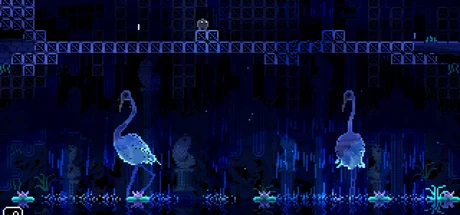
Compare this with ANIMAL WELL: A dense discovery game for players who enjoy testing ideas without a running explanation. Seemingly ordinary tools invite unexpected uses, making experimentation more valuable than following a long tutorial.
Official sources
Reviewed: November 2026
You might also like
 TUNICRead review →
 ANIMAL WELLRead review →
 InscryptionRead review →