THE REVIEW / Narrative
Pentiment
A richly observed community story that makes judgement consequential even when certainty is unavailable, using its illustrated form with unusual purpose.
The programme
Game facts
- Developer
- Obsidian Entertainment
- Publisher
- Xbox Game Studios
- Released
- 14 November 2022
- Platforms
- Windows (Steam edition)
- Model
- Paid game
- PEGI
- 16 · Bad Language — Steam UK listing
- Players
- Single-player
- Length
- Medium
- Difficulty
- 2 / 5 · Approachable
- Steam Deck
- Verified
PEGI source ↗ · Steam Deck status source ↗
Edition: Base game
The score, explained
The interest and responsiveness of the core decisions and actions.
How progression, exploration and goals fit together.
The coherence of the visual, musical and narrative presentation.
How clearly the game explains its rules and offers useful ways to engage.
The depth of optional goals, alternative approaches and reasons to return.
Investigate people, not just evidence
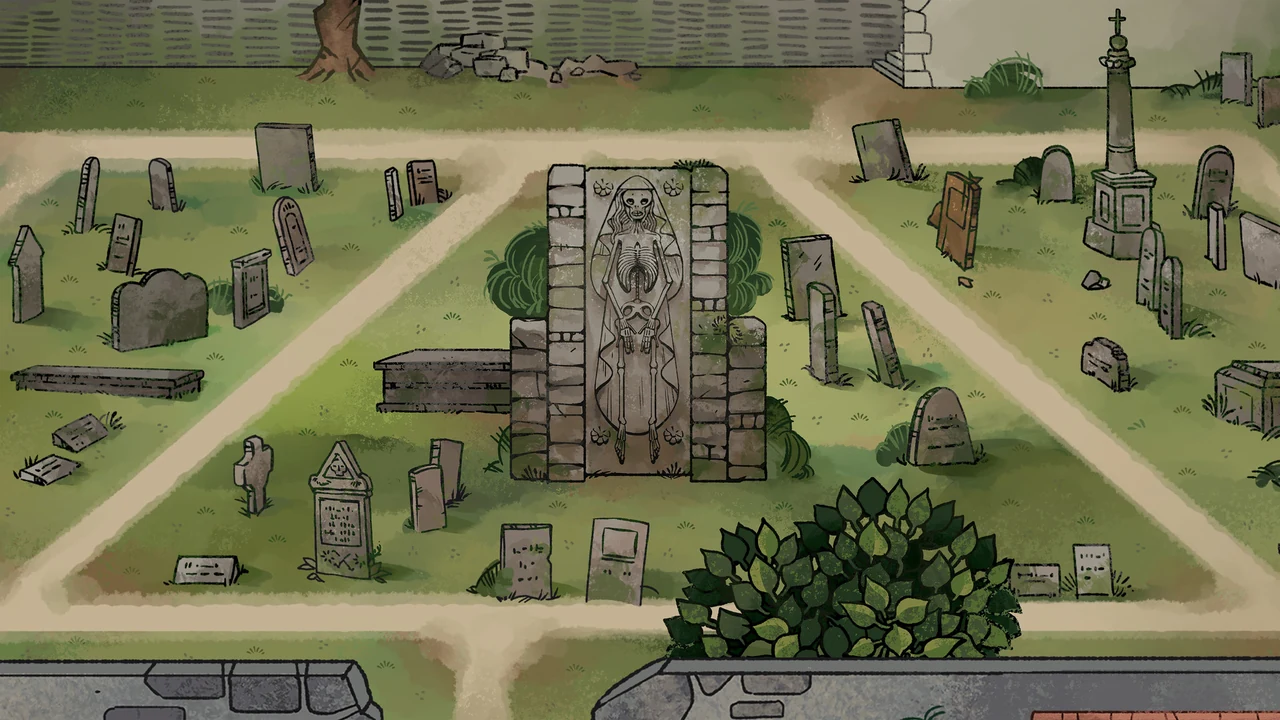
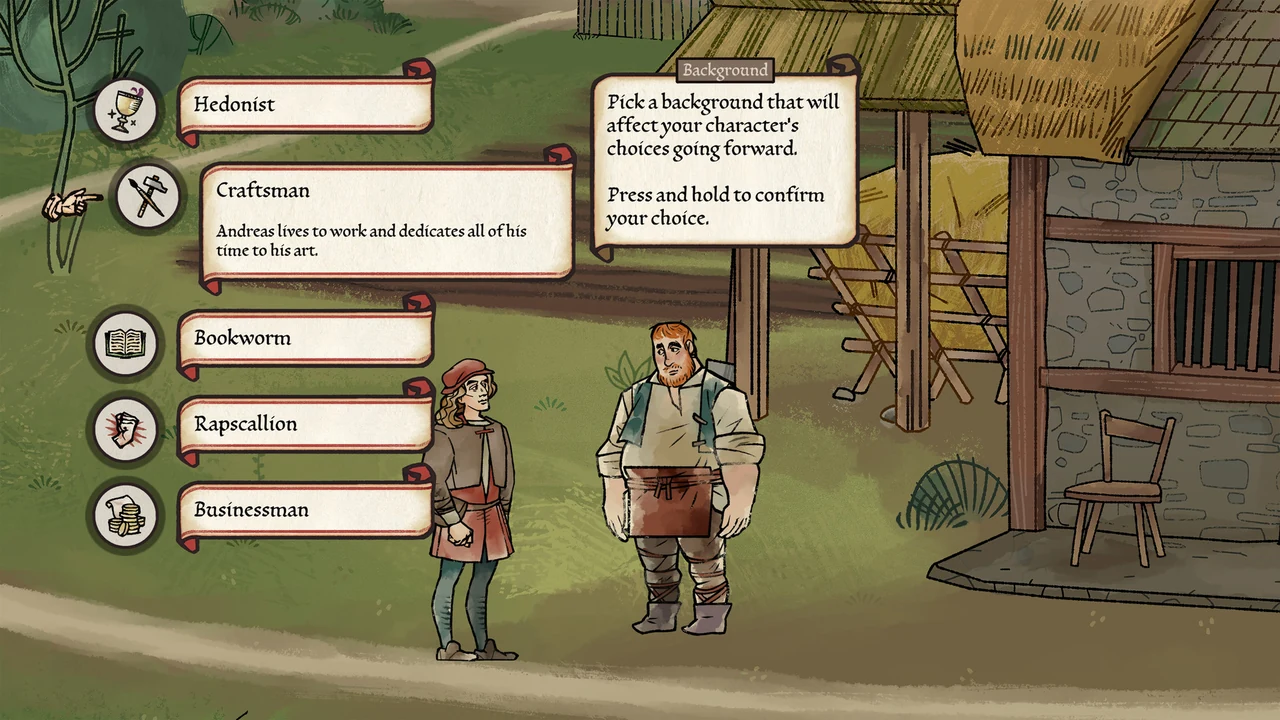
Pentiment begins by making a community worth paying attention to before asking you to judge anyone within it. As Andreas Maler, you move between Tassing and Keirsau Abbey, meeting people whose work, beliefs and standing shape what they will share. Choosing his educational and social background colours the conversations without providing a universal key to every person. The illustrated pages and changing lettering immediately make this world feel distinct from a conventional cinematic mystery. When an investigation takes shape, the question becomes where to spend your limited opportunities to learn more. The opening establishes an important boundary: this is a story about forming a judgement among people, rather than simply collecting every clue until an unambiguous answer appears in the final empty slot.
Consequences have time to develop
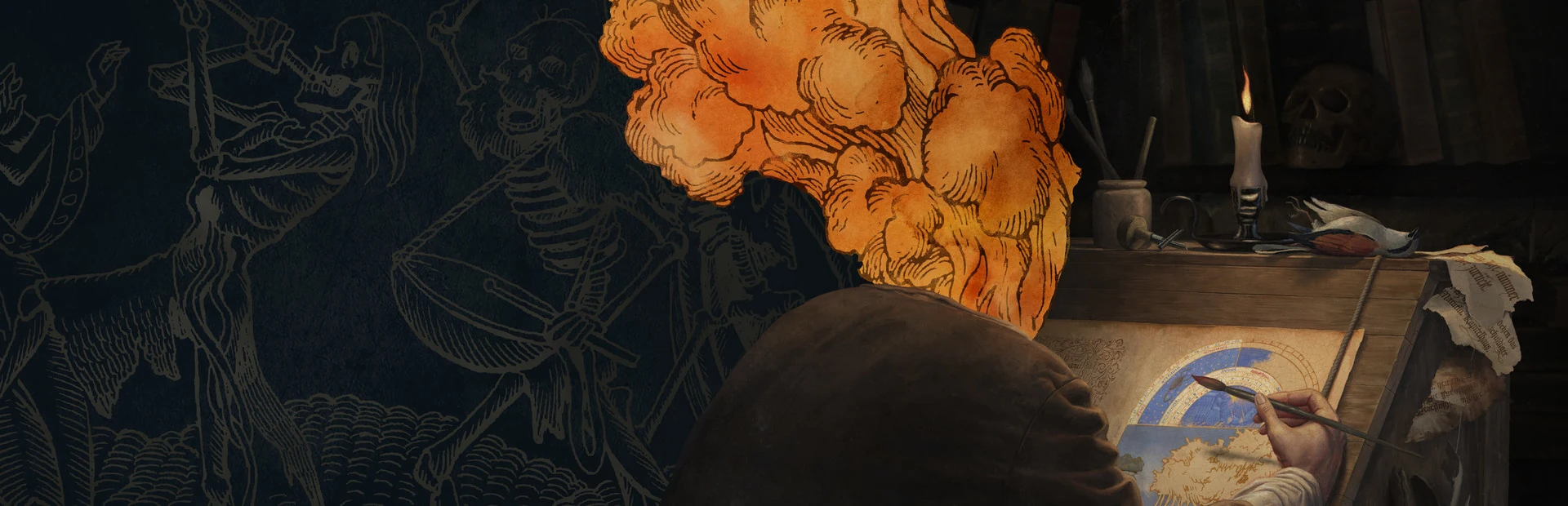
Pentiment’s strongest creative decision is to let its presentation explain how the community sees itself. Manuscript and woodcut influences are not an interchangeable historical skin; they suit a story concerned with who records events and whose account survives. Background choices give Andreas a perspective, while meals and ordinary conversations reveal tensions that a direct interrogation might miss. The passage of years then gives earlier decisions a scale beyond their immediate outcome. People change, relationships carry consequences and places acquire associations that a static setting could not hold. This is an especially compelling use of the indie-sized narrative form: a relatively contained town becomes rich through repeated attention and altered circumstances. Its drama depends less on the size of the map than on the meanings that accumulate within it.
Illustration is part of the historical argument
The commitment to conversation and uncertainty will not suit every mystery reader. A decision may need to be made while plausible alternatives remain, and the game does not promise the clean reassurance of proving every suspicion correct. That ambiguity is central to its subject, yet it can frustrate players who approach an investigation as a problem with a fully recoverable solution. Reading is the dominant activity; the stylised typography and writing effects may also require an adjustment, although the easy-read font and text settings provide useful alternatives. Returning to familiar streets supports the community focus but offers less spatial novelty than a travelling adventure. The pace asks you to care about daily life and social context even when you would prefer to pursue only the central accusation.
For readers comfortable making a judgement
Choose Pentiment if you enjoy stories in which a place is understood through its residents, disagreements and changing memory. It rewards a reader willing to consider why a person speaks as they do, rather than treating every exchange solely as a delivery mechanism for a clue. The historical setting gives those encounters texture, but specialist knowledge is not the main requirement; curiosity about people is more useful. Players who want voice-led spectacle, rapid action or a definitive answer to every uncertainty should weigh the slower, text-led approach carefully. For an indie collection focused on unusual narrative ideas, its lasting attraction is the relationship between individual judgement and communal history. The game makes the act of deciding matter even when complete certainty remains beyond reach.
The verdict
A richly observed community story that makes judgement consequential even when certainty is unavailable, using its illustrated form with unusual purpose.
Reasons to play
- Historical visual choices support the story’s interest in recorded memory.
- Ordinary conversations make the community feel socially connected.
- Consequences gather meaning as years pass.
Reasons to think twice
- Investigations deliberately leave uncertainty unresolved.
- Reading and revisiting familiar places define the pace.
See the game
Assist & accessibility
Explore the available settings and control options on the official game page before choosing your setup.
Parents’ guide
Players: Single-player. No in-game purchase marker in the checked Steam listing. Separate downloadable content may be sold.
Age classification: 16. Bad Language Steam UK listing
A useful starting tip
Choose the lead that best fits your current reasoning instead of assuming every possible conversation must be exhausted first.
A different direction
Compare this with Chants of Sennaar: Chants of Sennaar is a focused recommendation for patient puzzle solvers who want observation and language to drive progress. Deciphering languages makes understanding the world itself the main form of progression.
Official sources
Reviewed: November 2026
You might also like
 TUNICRead review →
 ANIMAL WELLRead review →
 Chicory: A Colorful TaleRead review →