THE REVIEW / Adventure
TOEM: A Photo Adventure
A compact photographic journey that turns observation into progress and gives small visual discoveries a cheerful sense of occasion.
The programme
Game facts
- Developer
- Something We Made
- Publisher
- Something We Made, popagenda
- Released
- 17 September 2021
- Platforms
- Windows · macOS · Linux (Steam edition)
- Model
- Paid game
- PEGI
- 3 — Nintendo Switch edition; not a separate PC classification
- Players
- Single-player
- Length
- Short
- Difficulty
- 1 / 5 · Gentle
- Steam Deck
- Verified
PEGI source ↗ · Steam Deck status source ↗
Edition: Base game
The score, explained
The interest and responsiveness of the core decisions and actions.
How progression, exploration and goals fit together.
The coherence of the visual, musical and narrative presentation.
How clearly the game explains its rules and offers useful ways to engage.
The depth of optional goals, alternative approaches and reasons to return.
Photography makes looking useful
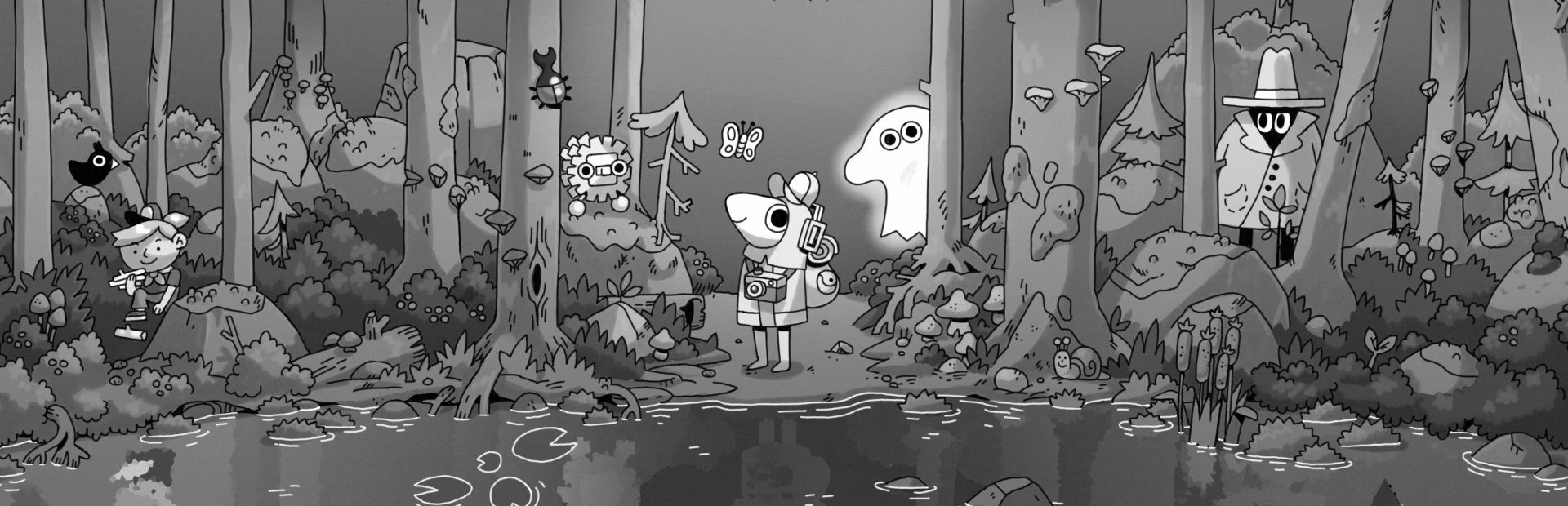
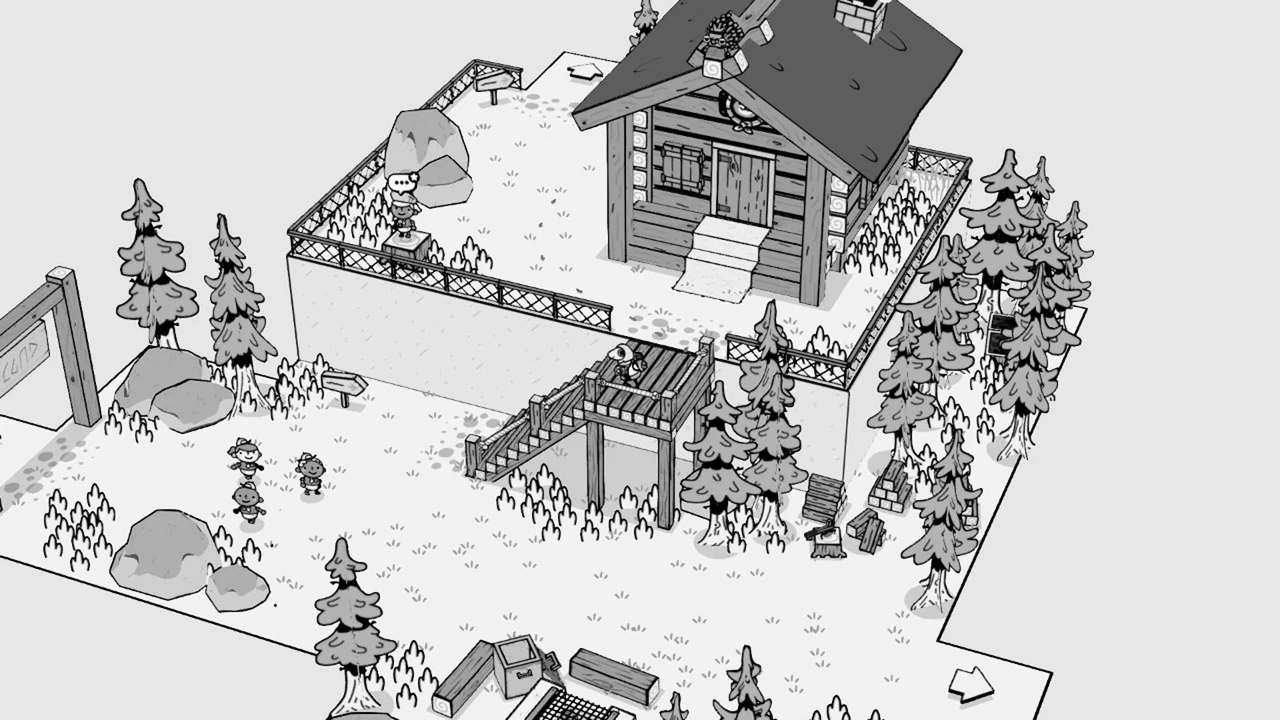
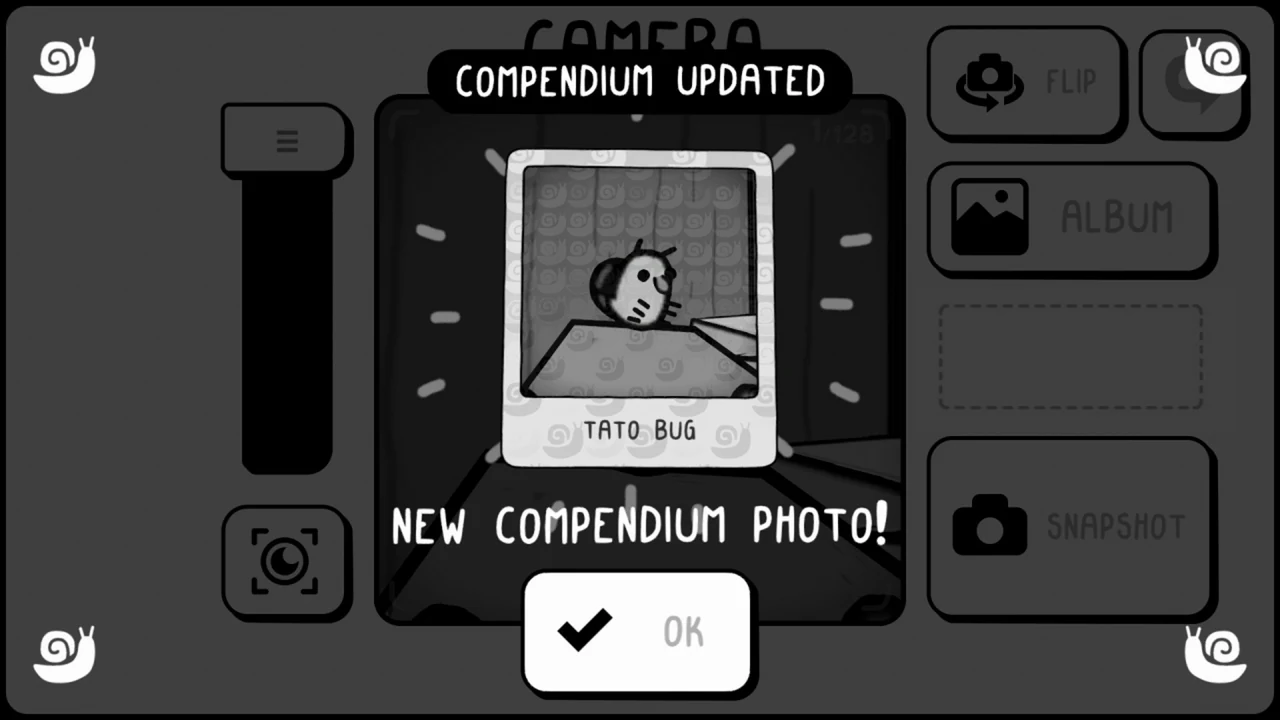
TOEM hands its traveller a camera and makes looking closely the most useful skill in the world. The journey is arranged around small places populated by people with requests, odd details and photographic opportunities. Moving the character gives you an overview, while raising the camera changes the relationship to the scene: the important detail might be small, distant or simply overlooked from the walking perspective. Helping residents earns the stamps needed to continue travelling, so progress grows out of attention rather than combat or a conventional inventory of power-ups. Its monochrome presentation makes this invitation unusually clear. A curious shape, a character’s expression or an arrangement of objects can become the reason to stop, inspect the surroundings and think about what a photograph might reveal.
Requests give a journey its shape
The camera works because TOEM treats photography as more than pointing at an obvious marker. A request can ask you to understand what someone means, find a suitable subject or reconsider a place from another angle. That gives the small environments more substance than their modest dimensions imply. The hand-drawn appearance also does useful work: removing colour helps silhouettes and playful details become the focus, while the change into the camera view makes framing an active choice. The broader journey remains approachable because tasks are broken into understandable requests and discoveries. For a collection of distinctive indie ideas, this is a convincing example of restraint. A familiar tool, a compact set of spaces and a patient tone are enough to establish a coherent identity without an elaborate progression system.
A monochrome world with recognisable subjects
The relaxed structure leaves relatively little room for players seeking demanding execution or deep character building. Once a location’s requests and hidden details have been understood, returning to it offers a different kind of pleasure from discovering it for the first time. Some tasks also depend on interpreting a description in the intended way, and a small missed detail can hold up an otherwise straightforward sequence. The camera’s shift of perspective is the central attraction, so the experience has less variety if taking and examining pictures never becomes satisfying in itself. Its friendly presentation should therefore be read as a statement of focus, not a promise that every type of player will find a preferred activity inside. TOEM stays committed to observation throughout the journey.
Choose it for small discoveries
TOEM is a strong fit for someone who enjoys being curious in a game without needing that curiosity to lead to a fight. It can sit comfortably beside more demanding titles in a journal, providing a clear change of pace and a smaller field of things to notice. Players interested in visual storytelling may particularly enjoy how much personality comes through in poses, drawings and requests. It is less suitable for anyone choosing primarily by competitive depth, large-scale exploration or elaborate upgrades. The best reason to select it is the possibility of finding delight in a detail that was present all along. TOEM builds its adventure around that modest discovery and gives the player a camera with which to make it their own.
The verdict
A compact photographic journey that turns observation into progress and gives small visual discoveries a cheerful sense of occasion.
Reasons to play
- Camera perspective makes familiar spaces worth another look.
- Clear requests provide a gentle structure for exploration.
- Monochrome drawings put personality and shape in the foreground.
Reasons to think twice
- The central activity offers little mechanical escalation.
- Some requests hinge on spotting one intended detail.
See the game
Assist & accessibility
Parents’ guide
Players: Single-player. No in-game purchase marker in the checked Steam listing. Separate downloadable content may be sold.
Age classification: 3. Nintendo Switch edition; not a separate PC classification
A useful starting tip
Treat each character's request as a clue about what to observe, then look beyond the most obvious subject before taking the photograph.
A different direction
Compare this with Chants of Sennaar: Chants of Sennaar is a focused recommendation for patient puzzle solvers who want observation and language to drive progress. Deciphering languages makes understanding the world itself the main form of progression.
Official sources
Reviewed: November 2026
You might also like
 TUNICRead review →
 ANIMAL WELLRead review →
 Chicory: A Colorful TaleRead review →