THE REVIEW / Deckbuilding strategy
Loop Hero
An unusual strategy loop that makes you the architect of the danger your hero must survive. Building the route around an automatically moving hero gives this strategy game an unusually clear central twist.
The programme
Game facts
- Developer
- Four Quarters
- Publisher
- Devolver Digital
- Released
- 4 March 2021
- Platforms
- Windows · macOS · Linux (Steam edition)
- Model
- Paid game
- PEGI
- 12 — Nintendo Switch edition; not a separate PC classification
- Players
- Single-player
- Length
- Long
- Difficulty
- 2 / 5 · Moderate
- Steam Deck
- Playable
PEGI source ↗ · Steam Deck status source ↗
Edition: Base game
The score, explained
The interest and responsiveness of the core decisions and actions.
How progression, exploration and goals fit together.
The coherence of the visual, musical and narrative presentation.
How clearly the game explains its rules and offers useful ways to engage.
The depth of optional goals, alternative approaches and reasons to return.
You design the trouble ahead
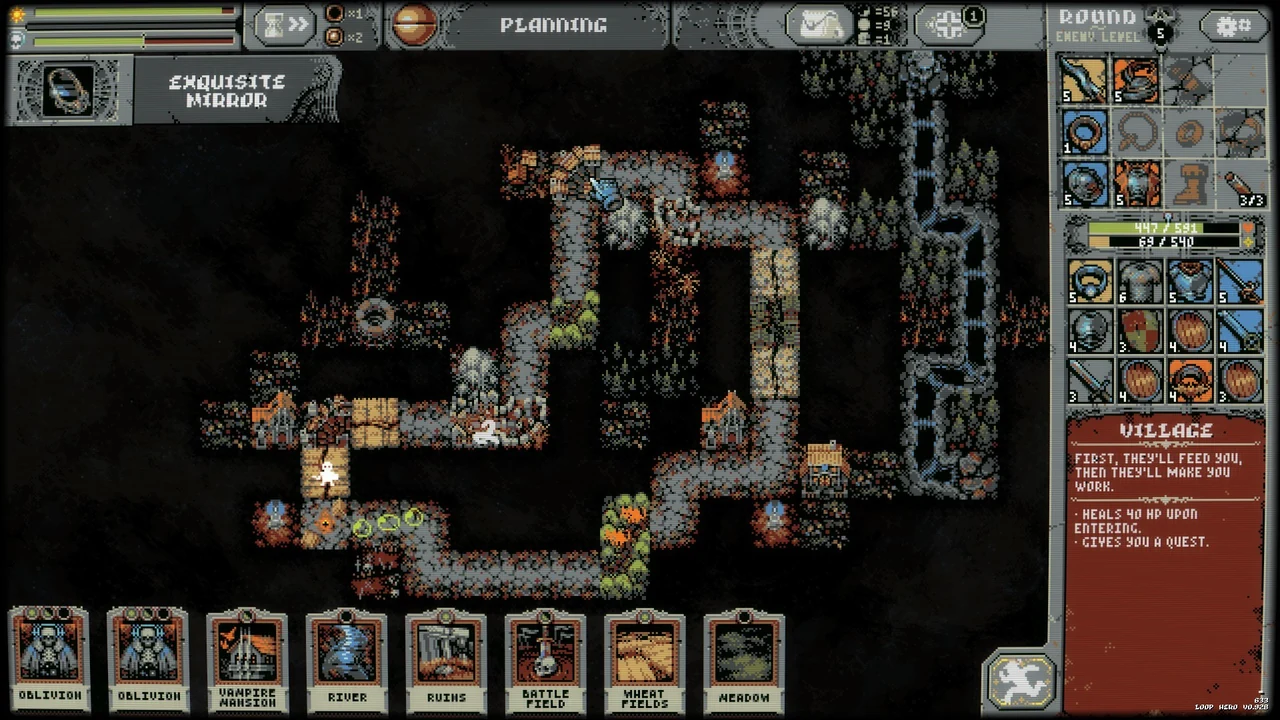
Loop Hero puts the player's main decisions around the journey rather than inside every combat exchange. A hero travels a repeating route while you place terrain, buildings and enemies using cards. Those placements create both danger and opportunity, making the challenge partly something you have designed yourself. Equipment choices then help determine whether the hero can survive what the route has become. Our high core-play score reflects this unusual division of responsibility. It encourages planning beyond the next fight and makes adding another resource source a decision with consequences. Someone who wants direct control over every attack may find it detached. The appeal is in shaping the conditions of success, not in expressing reflexes through the character's immediate actions.
An expedition is part of a larger plan
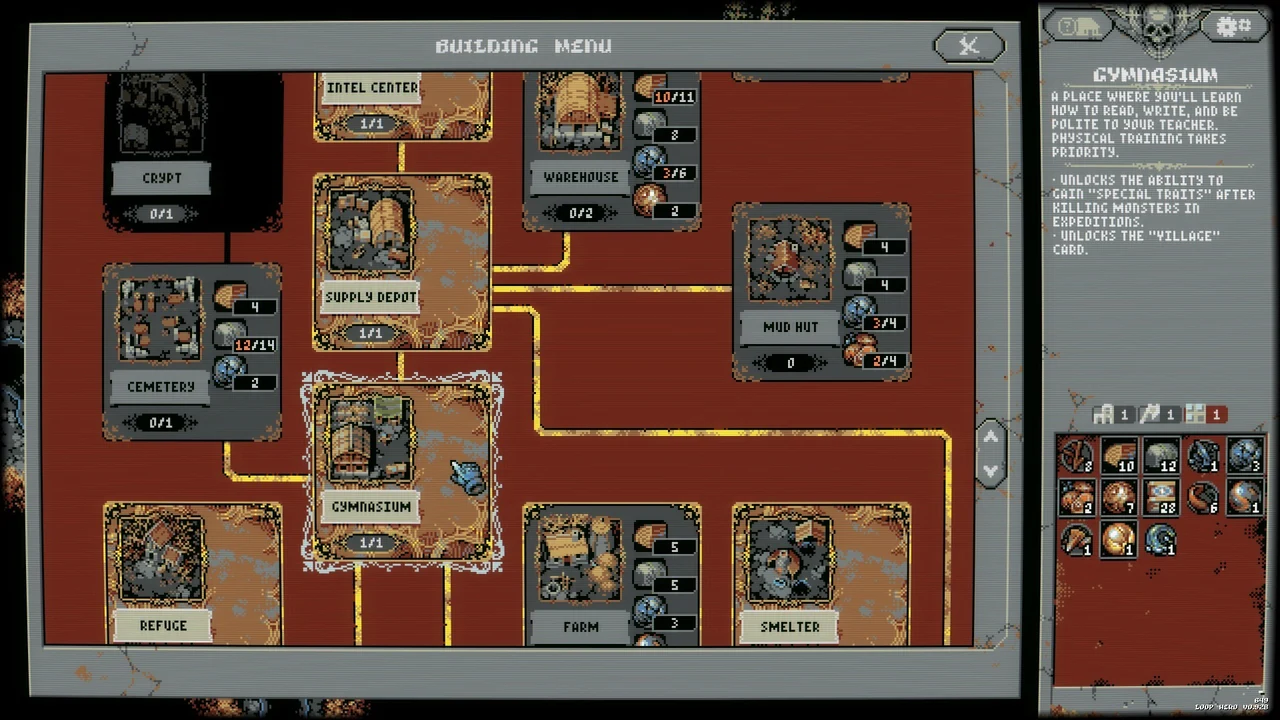
Resources recovered from the loop develop the survivors' camp, while new classes, cards and perks expand later expeditions. That creates a useful connection between a risky outing and a broader plan. The player is not simply trying to make the current route harder; the question is what can be gained without losing the ability to benefit from it. The game confirms changing loop paths and unlockable options, giving experimentation a concrete structure. We rate the progression positively because improvement includes better decisions as well as more available tools. Its limitation is repetition by design. Readers who need a new setting or story scene after every success may be less satisfied than those who enjoy revisiting a system with a revised plan.
A ruined world expressed as a system
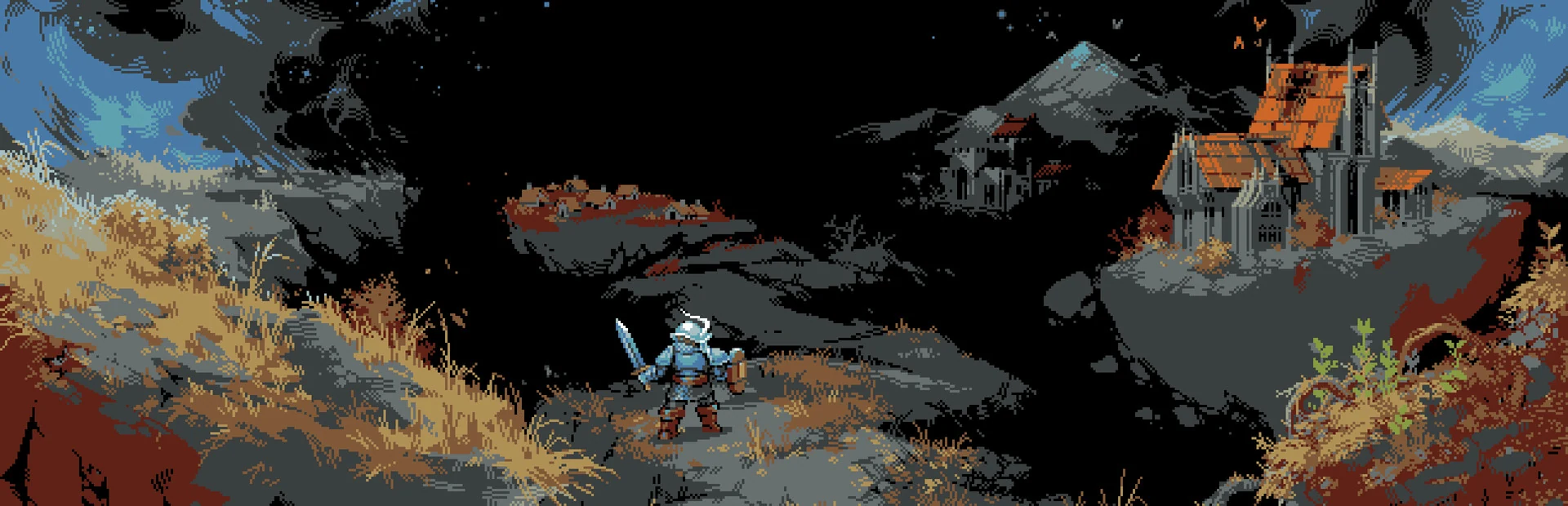
Loop Hero's setting begins with a world trapped in a destructive cycle, which gives the repeating route a narrative purpose. The visual presentation supports that stripped-back premise: terrain cards, equipment and the route itself are the main things the player needs to distinguish. We value the consistency between the world idea and the structure more than visual spectacle here. Information remains central, and the comparatively modest clarity score reflects how many relationships a new player must understand before a placement becomes an informed choice. It is an editorial judgement about the learning demands of indirect control, layered upgrades and consequences that may only become apparent later in an expedition. Placing a new terrain card changes what the hero will face on subsequent circuits.
Return with a different hypothesis
Loop Hero makes a persuasive recommendation for someone who likes changing one part of a plan and seeing how the system responds. Choosing a different class or set of cards can alter the kind of route you are trying to construct, while camp development gives those experiments a continuing context. Our return score rewards that available structure, not the assumption that procedural generation guarantees endless novelty. If indirect battles remove too much involvement for your taste, Slay the Spire offers a useful alternative with direct decisions during combat. Choose Loop Hero when preparing the challenge and managing its accumulated risk sounds more interesting than issuing every order. Its most distinctive question is whether the world you have built is still one your hero can survive. Building the route around an automatically moving hero gives this strategy game an unusually clear central twist.
The verdict
An unusual strategy loop that makes you the architect of the danger your hero must survive. Building the route around an automatically moving hero gives this strategy game an unusually clear central twist.
Reasons to play
- Placing terrain makes the player responsible for the challenge
- Equipment and camp upgrades connect short and long decisions
- Different classes and decks support experimentation
Reasons to think twice
- Indirect combat can feel detached
- Repeated expeditions depend on enjoying incremental planning
See the game
Assist & accessibility
Explore the available settings and control options on the official game page before choosing your setup.
Parents’ guide
Players: Single-player. No in-game purchase marker in the checked Steam listing. Separate downloadable content may be sold.
Age classification: 12. Nintendo Switch edition; not a separate PC classification
A useful starting tip
Think about the danger a new tile creates across several laps, not only the reward it offers immediately.
A different direction
Compare this with Wildermyth: A tactical story generator that gives ageing, relationships and lasting transformations strategic weight. Lasting character transformations connect the tactical campaign to the stories generated around the party.
Official sources
Reviewed: November 2026
You might also like
 TUNICRead review →
 ANIMAL WELLRead review →
 Chicory: A Colorful TaleRead review →